



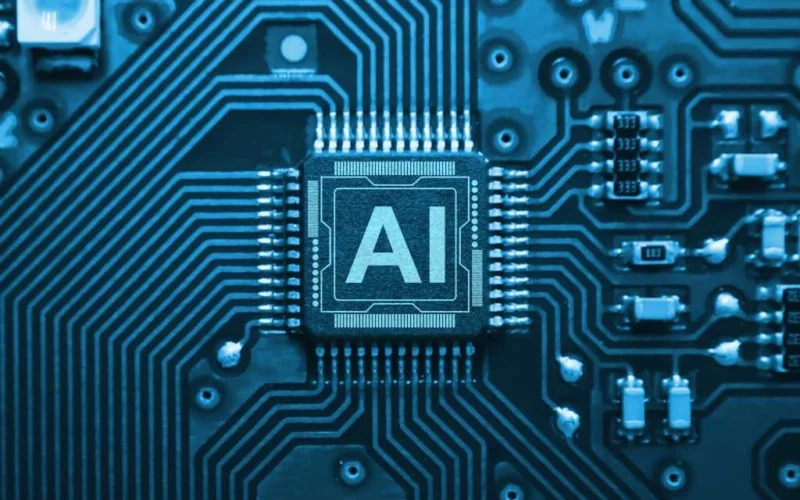
TPUs, or Tensor Processing Units, are specialized chips created by Google to accelerate the processing of AI workloads, particularly those involving deep learning models. These chips fall under the category of application-specific integrated circuits (ASICs), designed with a focus on optimizing tensor-heavy tasks critical for artificial intelligence.
How TPUs Work
TPUs are engineered to enhance the performance of machine learning (ML) algorithms that require substantial matrix operations. At their core, they operate using tensor computations, which involve multi-dimensional arrays crucial for data processing and analysis. By employing vast arrays of arithmetic logic units and specialized processing blocks known as tensor cores, TPUs manage to execute complex calculations efficiently.
This architecture enables TPUs to tackle operations such as addition and multiplication, allowing them to perform optimally for deep learning tasks that need to process large datasets, including intricate data types like images and audio.
Advantages of TPUs
TPUs offer several benefits that make them suitable for AI applications:
- Purpose-built Architecture: TPUs are optimized for matrix and tensor operations, significantly reducing the time required for both training and inference compared to traditional GPUs and CPUs.
- Massive Parallelism: With a vast number of ALUs, TPUs can execute numerous computations simultaneously, accommodating large batch sizes and complex neural network architectures.
- Scalability: Organizations can cluster TPUs into large groups for enhanced performance, enabling massive model training for various applications such as speech recognition and automated translation.
- Energy Efficiency: TPUs consume less power while maximizing performance, making them a cost-effective solution for data centers.
- Cloud Integration: TPUs are readily available through Google Cloud, simplifying deployment and scaling.
Use Cases for TPUs
TPUs are employed across various domains, including:
- Natural Language Processing (NLP): Used for applications like chatbots, translation, and sentiment analysis.
- Computer Vision: Crucial for facial recognition, medical imaging, and IoT devices.
- Recommendation Systems: Personalizing content across media and e-commerce platforms.
- Content Generation: Assisting in creating text, video, audio, and even 3D models.
- Data Analytics: Processing large datasets to extract meaningful insights.
Comparison: TPUs vs. GPUs vs. CPUs
Each type of processor—TPUs, GPUs, and CPUs—plays a unique role in computing:
- TPUs: Primarily designed for AI and deep learning workloads, offering high performance for tensor-heavy tasks.
- GPUs: Flexible and versatile, suitable for a wide range of tasks including gaming and generic computing, with good support across various frameworks.
- CPUs: Serve as the traditional workhorse in computing environments, ideal for general-purpose tasks but lag behind in parallel processing capabilities.
Challenges and Limitations
Despite their advantages, TPUs come with some limitations:
- Specialization: Their design makes them less effective for non-AI workloads.
- Limited Availability: Primarily accessed through Google Cloud, which may not align with all deployment strategies.
- Framework Lock-In: While TPUs excel with TensorFlow, their compatibility with other frameworks like JAX and PyTorch is still developing.
- Expertise Requirement: Optimizing applications to leverage TPU architecture may require specialized skills.
Conclusion
TPUs represent an exciting advancement in AI computing, greatly enhancing the efficiency of model training and inference. While GPUs and CPUs will continue to play significant roles in computing, TPUs promise to propel the capabilities of large-scale AI applications to new heights. For organizations venturing into AI, leveraging TPUs can unlock potent opportunities for innovation and performance.
For more information on Tensor Processing Units, visit the Artificial Intelligence section.