




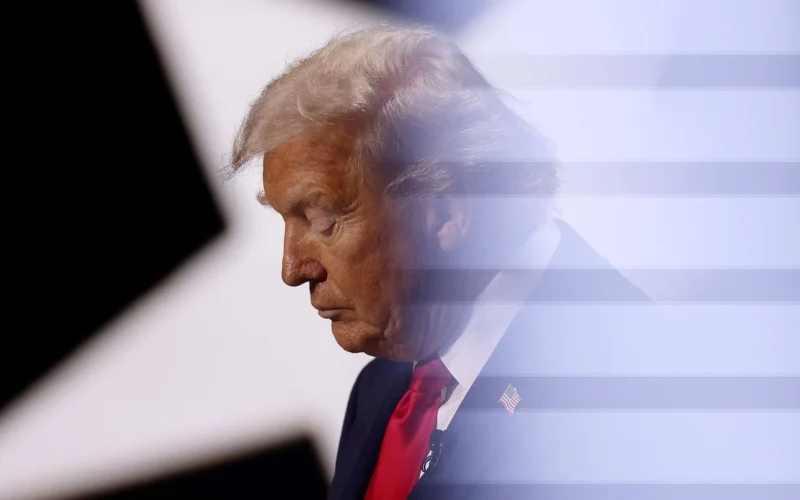
President Donald Trump recently signed an executive order that aims to establish a national regulatory framework for artificial intelligence (AI), which could undermine state-level legislation on the subject. Titled “Ensuring a National Policy Framework for Artificial Intelligence,” the order initiates the creation of a Justice Department task force to challenge any state laws deemed conflicting with federal policy. Additionally, it instructs the Department of Commerce to consider withholding future broadband funding from states that enact "onerous" AI legislation.
This move towards federal preemption of state AI laws has garnered support from AI investors, conservative think tanks, and technology industry groups, who argue that a fragmented approach to AI regulation could hinder Silicon Valley’s progress and impact America’s standing in the global market. During the signing ceremony, White House AI adviser David Sacks highlighted that the order provides the administration with tools to counter excessive state regulations, while also assuring protection measures for specific areas such as children’s safety.
Key differences from earlier drafts of the executive order include provisions that would allow state AI laws focused on child protection and infrastructure development to remain in place. Trump emphasized the need for a centralized regulatory source to streamline approvals which could otherwise get complicated with input from fifty states.
In the absence of robust federal regulations, states have begun to implement their own guidelines and legislation governing AI usage. Trump’s order specifically mentions Colorado’s SB24-205, which seeks to limit algorithmic discrimination, as an instance of state law being accused of embedding ideological bias. Other laws, like California’s requirement for large tech companies to disclose safety frameworks for their AI models, and New York’s pending bill to impose civil penalties on non-compliant AI developers, are also likely to fall under scrutiny.
State attorneys general have quickly condemned the executive order, arguing it represents an overreach that threatens local governance of technological advancements. New York attorney general Letitia James expressed concern that these new federal initiatives could stifle progress and called for collaboration between state and federal entities, emphasizing the importance of state-level agility in regulating fast-evolving technologies.
Despite the intention to set a unified national framework, Trump’s executive order does not grant the power to prohibit states from enacting their own laws. Civil rights organizations, including the ACLU, have criticized the order as unconstitutional, signaling a probable legal challenge ahead.