



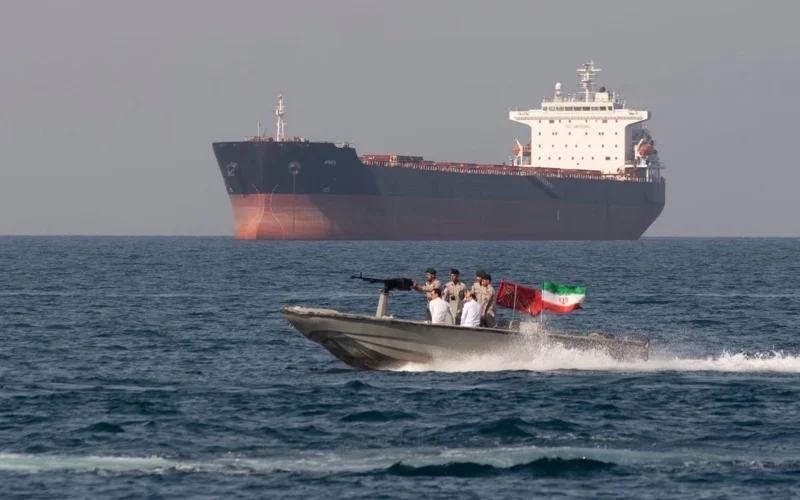
In the Strait of Hormuz, Iran is employing a unique and asymmetrical naval strategy to impede the passage of cargo ships. This innovative tactic comes in response to the devastation of its traditional naval fleet, mainly due to US-Israeli military strikes. The Iranian Revolutionary Guard has mobilized a fleet of small military vessels, colloquially referred to as the “mosquito fleet,” which are heavily armed with missiles, machine guns, and drones. Their size and speed enable these boats to create significant disruptions, particularly for large container ships.
US President Donald Trump previously downplayed the threat posed by these small vessels, assuring that Iran’s larger naval capabilities were effectively neutralized. However, shortly after his comments, Iranian operations using these smaller boats resulted in the seizure of two sizable container ships, demonstrating the fleet’s actual impact on maritime security in the region.
The origins of these smaller vessels trace back to the Iran-Iraq War, where they were employed to disrupt oil tankers supporting the Iraqi effort. Experts note that the effectiveness of this fleet lies in its sheer numbers, with estimates of over a thousand small boats providing Iran with a formidable and swarming attack capability. This tactic poses a challenge not just for its immediate targets, but for any militarized response from the US or its allies, as it complicates their navigation and interventions.
While Iran’s conventional naval forces suffered greatly from recent military actions, the Islamic Revolutionary Guards Corps (IRGC) retains its asymmetrical naval capabilities, largely intact and positioned to threaten maritime traffic in the strategically critical Strait of Hormuz. Supporting this fleet are concealed coastal bases, radar systems, and a network of drones, enabling Iran to create a complex operational environment that can impose attrition rather than seek direct confrontation.
These small vessels often hide in reinforced underground tunnels along the gulf’s coast, making them difficult to target effectively. Experts believe Iran’s broader strategic aim is to maintain an unstable maritime situation that complicates access to this vital waterway, thereby raising military and economic costs for any intervention. The challenge for the US and its allies now lies in countering this sophisticated and flexible maritime threat without escalating into a more extensive conflict, as the hidden nature of these assets makes complete destruction unlikely without a substantial military commitment on the ground.