



Researchers have recently raised skepticism about Microsoft’s ambitious plan to achieve scalable quantum computing by 2029 through its Majorana chip program. A peer-reviewed paper by Dr. Henry Legg from the University of St Andrews, published in Nature, questions the validity of Microsoft’s claims, specifically its Topological Gap Protocol (TGP) framework, which is intended to detect quantum states in hypothetical Majorana particles.
Dr. Legg, known for his critical examination of the data, likened Microsoft’s bold assertions to a chaotic setup rather than a cohesive innovation. He pointed out that the conclusions drawn by Microsoft may have been based on flawed data analysis and could also be explained by alternative phenomena. His statements echo a sentiment of skepticism that has existed among many scientists regarding Microsoft’s achievements.
The Majorana program has been central to Microsoft’s vision for quantum computing, relying on the existence of Majorana fermions—subatomic particles yet to be definitively detected. Despite a claimed breakthrough in 2018, Microsoft had to retreat when the evidence was challenged, a setback affirmed by the publication’s editors.
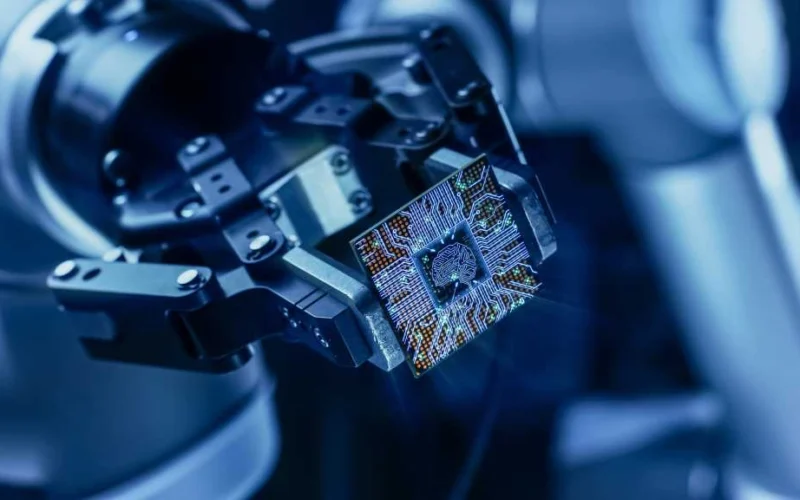
In 2025, Microsoft attempted to turn the tide by introducing the Majorana 1 chip, and this year, they unveiled the Majorana 2, claiming significant reliability improvements thanks to AI advancements. However, the paper by Dr. Legg has further intensified scrutiny on their progress, particularly since Microsoft has not yet made critical data publicly available for unbiased analysis.
In response to the critique, Microsoft remains steadfast in its confidence regarding the Majorana program’s potential. The company continues to promote its partnership with DARPA on the US2QC initiative, asserting its results and roadmap are sound. Dr. Chetan Nayak, Microsoft’s technical fellow, reiterated that scientific skepticism is an essential part of validation and that they’ve engaged positively with critiques from the academic community.
As the competitive landscape of quantum computing research heats up, with other tech giants like Google, IBM, and Amazon also pursuing similar innovations, the gap between achieving quantum technology and practical application in business environments is expected to be gradual, rather than an immediate transformation.
For more on Microsoft’s involvement in quantum computing, see: