



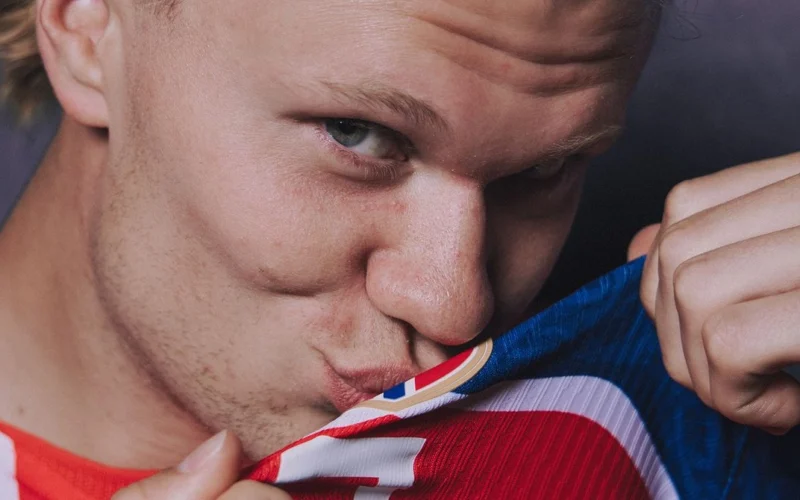
Last week, amidst the buzz of the 2026 World Cup, a viral video featuring Norwegian striker Erling Haaland eating in a restaurant caught the internet’s attention. This clip, which racked up over 31 million views on X, was actually clipped from a slapstick skit by Chinese comedian Jin Long, shared on TikTok just weeks before. Fact checks acknowledged the clip’s origin, yet the video continued to spread, solidifying a fantasy image of Haaland that many fans embraced.
In this new realm of celebrity, stardom relies less on personal image control and more on becoming a vivid character capable of being remixed by fans and AI alike. Erling Haaland, who has become a meme phenomenon, has effectively transitioned into an internet character, finding fame not just for his athletic prowess but also for the relatable and humorous persona cultivated online.
His recent endeavors in China have fueled his meme status. Haaland has been featured in a commercial for a Chinese herbal drink, tried speaking Mandarin, and was affectionately nicknamed Habao (meaning "Ha Baby"). Additionally, he has gained millions of followers on various platforms like Douyin and Weibo, engaging fans in a wave of memes that reflect the playful nature of internet culture.
The intersection of AI and sports fandom has transformed how fans experience athletes. They are no longer passive viewers of game highlights; instead, they engage with athletes as characters. The “fanon” – fan-generated narrative and lore – is nurtured by AI and offers fans a chance to become creators in shaping these narratives.
This development raises questions about the nature of authenticity. While Haaland’s deepfake may have misled some viewers, a substantial audience willingly participated in sharing it. This phenomenon mirrors earlier instances of deepfakes in popular culture, such as the @deeptomcruise account and AI-generated music that captivated listeners long before brand initiatives could intervene.
Haaland’s rise to prominence during this tournament has been further buoyed by his relatable content, shared through his personal Snapchat account, where he embraces a light-hearted image in stark contrast to his on-field demeanor. He posts content ranging from comedic videos to selfies, bridging the gap between celebrity and internet culture.
Other players, like Kylian Mbappé, have also been transformed into meme characters, providing fertile ground for fan-generated humor. The "Dictator Mbappé" meme, which humorously reimagines him as various authoritarian figures, showcases how athletes are continuously woven into internet narratives that influence their public personas beyond sports.
The shift in how athletes are perceived and how they interact with fans indicates a broader evolution in celebrity culture, where accessibility and audience involvement shape their identities. With the aid of AI, fans can create content that fits the character of the athlete, reducing the necessity for direct engagement from the stars themselves.
In this digitally augmented environment, it appears that modern stardom thrives not on stringent control of one’s image, but on the fan community’s ability to craft narratives that resonate, ensuring that characters like Haaland remain at the forefront of the conversation.