




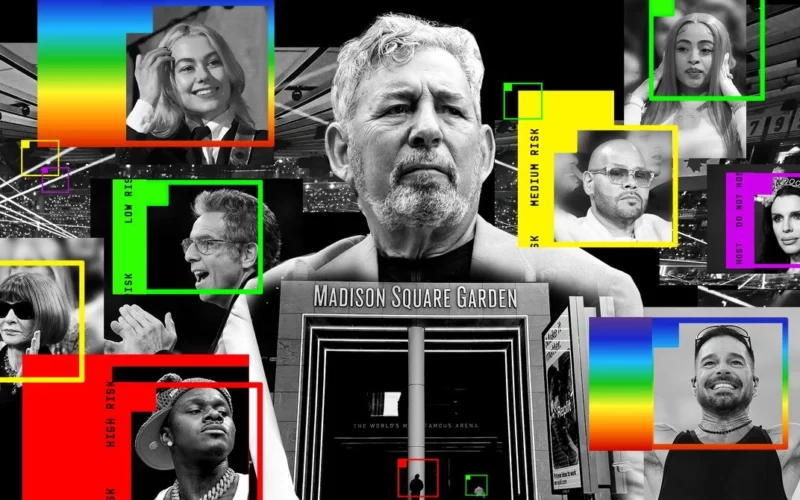
Madison Square Garden (MSG) has been storing a database of notable individuals, including celebrities and influential fans, and has categorized them using various risk labels, such as “LGBTQIA,” “DO NOT HOST,” and risk levels ranging from low to high. This data was recently publicized following a major hack by a group known as ShinyHunters, revealing over 39,000 entries, including details about many high-profile figures associated with the venue, like Edie Falco, Mark Ronson, and Fat Joe.
Fat Joe, a noted Knicks superfan, has a “medium risk” designation within this internal database. This categorization stems from his connections to other celebrities who have been critical of MSG and team owner James Dolan. The way MSG created this list raises questions about their monitoring tactics, particularly regarding negative comments made online. Previous instances show MSG scrutinizing individuals for social media commentary, even going so far as to involve local law enforcement.
Critics of the organization describe the system as overly paranoid and indicative of a culture of fear surrounding public opinion. Well-known figures such as Adam Pally and Pete Rock also appear in the database, with similar warnings regarding public comments concerning the management. Pally is indicated as “not to be hosted” due to past criticisms of the Knicks, while Pete Rock received a “DO NOT HOST” label after he called for a boycott against Dolan.
The database even tracks details about some attendees based on their relationships or the actions of their partners, raising broader concerns about privacy and the motives behind such surveillance efforts. A separate, larger database was also revealed, containing sensitive personal data for millions.
The fallout from this security breach has prompted legal actions, including a class-action lawsuit against MSG, further illuminating the implications of their expansive surveillance practices. ShinyHunters, the hacker group responsible for the breach, claimed they targeted MSG because of their invasive monitoring techniques, which included facial recognition systems in their venues.
The exposure of personal data and internal policies has ignited discussions regarding the necessity and ethics of such surveillance measures, especially in spaces that appeal to a diverse array of individuals. The risk scoring system not only reflects MSG’s internal perception of public figures but also raises significant ethical concerns about privacy and the treatment of fans and celebrities alike within these sports and entertainment venues.


