




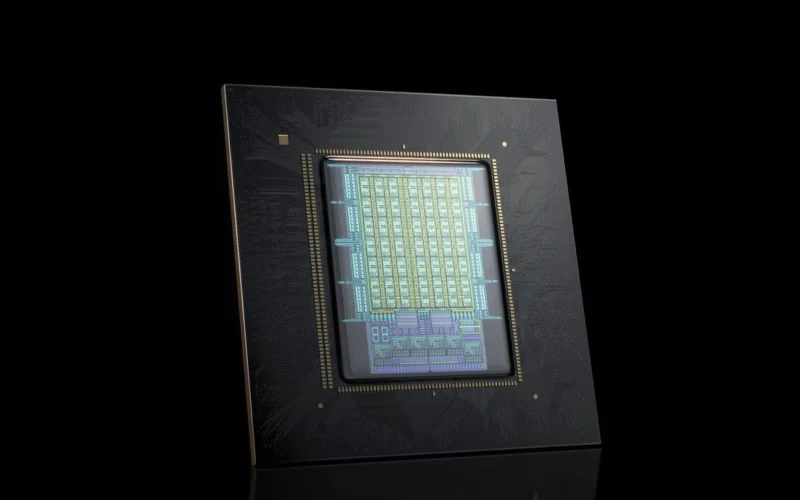
Nvidia recently unveiled its Vera Rubin chip system, a significant step in its ambitions to dominate AI infrastructure by integrating CPUs and GPUs. The announcement comes just before AMD’s product showcase, positioning Nvidia to emphasize its advancements in performance and efficiency for AI applications.
Executives from Nvidia showcased the Vera Rubin system during a workshop at their Santa Clara headquarters, highlighting its ability to process more data while reducing power consumption. Traditionally known for their GPUs, Nvidia now seeks to broaden its scope by catering to the increasing demand for CPUs, especially as AI systems evolve to require more sophisticated processing capabilities.
The Vera Rubin platform is set to replace the previous hybrid superchip, Grace Blackwell, featuring a balanced combination of 36 Vera CPUs and 72 Rubin GPUs. It’s also available separately for customers, with potential sales to Chinese clients anticipated as early as August. The system is designed for ease of use—Nvidia claims it can convert installations from hours to mere minutes due to reduced cabling needs, enhancing operational efficiency.
Nvidia has set ambitious performance goals with the Vera Rubin, claiming it can process ten times the tokens per watt compared to its predecessor. The new architecture promises to surpass competing CPUs from AMD and Intel in speed and efficiency, catering to the heightened demand for high-bandwidth memory amid ongoing shortages.
The Vera Rubin system employs a fully liquid-cooled design, optimizing energy use for cooling compared to conventional air methods. Nvidia aims for a launch in the latter half of the year, with high-profile partners like Microsoft and OpenAI already on board.
As other companies, including AMD, prepare to announce their advancements, Nvidia is keenly aware of its competition in securing long-term contracts to supply cutting-edge chips to key players in the AI landscape. This push for Nvidia is underscored by its shift from a chiplet architecture, which can hinder data movement efficiency, to a monolithic chip design that promises faster processing.
Nvidia’s ability to adapt and innovate will be crucial as it seeks to maintain its leading position in the rapidly evolving semiconductor space focused on AI and data center needs.


