





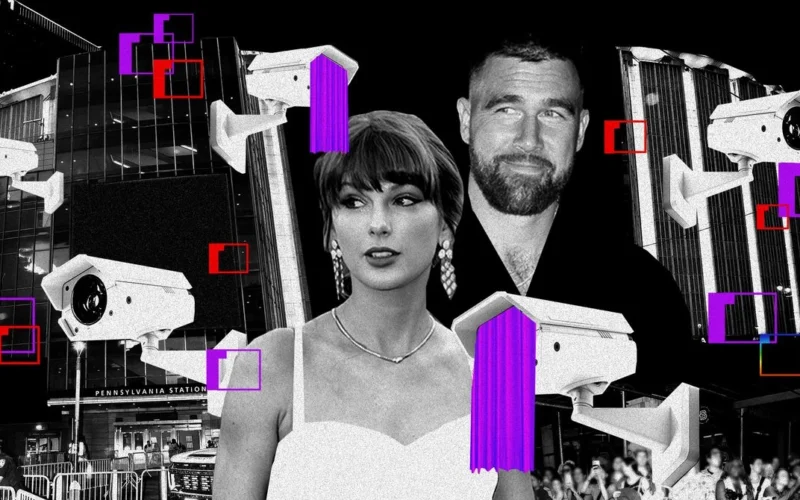
Madison Square Garden (MSG), owned by James Dolan, is known for its extensive surveillance system that has been put in place primarily for security purposes. This system includes a face-recognition network designed to enhance security measures at one of the most significant venues in the country.
On July 2, 2026, as Taylor Swift and Travis Kelce prepared for their wedding celebration at MSG, the venue saw heightened security presence with roughly 130 police officers assigned to the area. In preparation for the couple’s rehearsal dinner, the venue’s surveillance capabilities were notably restricted. According to an internal document reviewed by WIRED, MSG’s security team was largely locked out of the camera network for the night, limiting their ability to operate the face-recognition system at the Garden.
This lockout on July 2 was reportedly repeated on the wedding night, July 3, when around 1,000 high-profile guests attended. Swift’s team made extensive efforts to maintain the event’s privacy. Guests were required to sign nondisclosure agreements before receiving invitations, and specific parking arrangements were made to prevent detection by the venue’s typical surveillance measures. There was also a strict no-phone policy to restrict photography.
The internal memo indicated that the video management system used at MSG was locked down for seven hours at the executive’s request, citing a "client privacy request." Therefore, many standard security practices were bypassed, as only a few top executives had access while others were forcibly logged off. Notably, security measures have been a significant part of MSG’s operations, which include vigilance against individuals perceived as threats based on past criticisms or disputes with Dolan.
The face-recognition and surveillance tactics employed at MSG have sparked controversy. While the protocols aimed at ensuring safety, instances have emerged where individuals, including those critical of Dolan, were flagged by the security systems and prohibited from entering. Critics of the surveillance measures argue that this exemplifies a concerning trend where privacy becomes a privilege for a select few, while the general public remains subject to heightened monitoring.
Despite the venue’s reputation as a secure location, certain aspects were notably absent for Swift and Kelce’s event. Events at MSG typically see the surveillance cameras remain active, even during police functions. Locking down the entire video system for this exclusive celebration appeared unprecedented, emphasizing the lengths the couple and their teams would go to ensure privacy—essentially purchasing an atypical level of discretion for a high-profile wedding.
This particular situation highlights an ongoing discourse surrounding the use of surveillance technology in public spaces, especially when used in a manner that favors elite interests. Observers have noted the implications that arise when privacy is orchestrated through economic means, confronting the societal need for equitable surveillance practices for all, regardless of status or wealth.


