




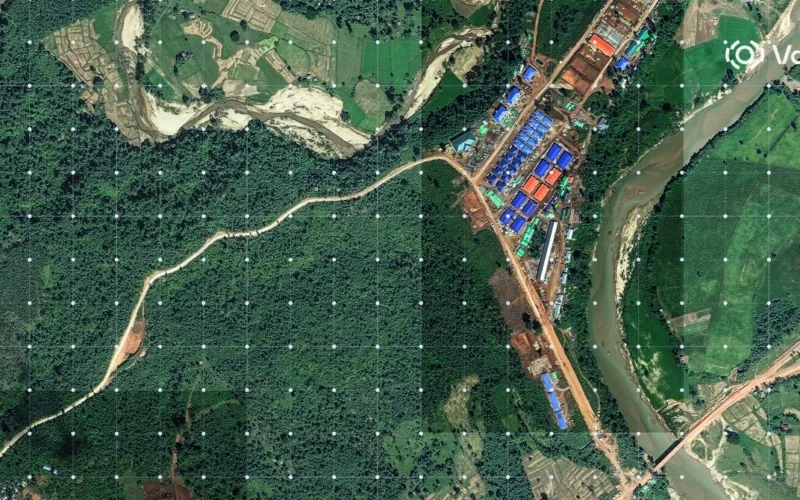
Analysis of satellite images has revealed that over two dozen suspected scam compounds have rapidly developed in Myanmar, particularly in the Myawaddy region near the Thai border, despite a supposed crackdown on such operations. This surge in activity, noted in the last six months, highlights the resilience of the scamming industry, which continues to thrive amidst efforts to dismantle it.
The International Justice Mission (IJM), an anti-human trafficking nonprofit, conducted the satellite analysis and discovered that at least 25 new sites have emerged since the beginning of the year. These images show significant deforestation and land development, with new buildings and essential infrastructure being established to facilitate large-scale scam operations.
Eric Heintz, a global analyst at the IJM, expressed skepticism about the effectiveness of previous crackdowns. While these had disrupted operations, the rapid establishment of new compounds suggests that the overall capacity for scamming has not diminished. “This imagery confirms initial doubts about the seriousness of the crackdown,” Heintz stated.
Scam compounds have proliferated across Southeast Asia, particularly in Myanmar, Cambodia, and Laos, often run by Chinese organized crime groups. These locations generate vast sums through online scams, including elaborate cryptocurrency and romance fraud schemes targeting victims globally.
Many of those who carry out the scams are victims of human trafficking, coerced into working in these compounds under dire conditions. Reports indicate that victims, who are promised legitimate job opportunities, can have their passports confiscated, face physical abuse for non-compliance, and find themselves trapped with little hope of escape. Over the years, hundreds of thousands have been ensnared by these scams.
Despite international sanctions and visible attempts to curb these operations, including military raids on known compounds, the growth of new sites suggests that the underlying criminal networks remain intact and operational. Mechelle B. Moore, CEO of Global Alms Incorporated, noted that her organization identified several new sites and observed that many previously raided compounds have been quickly restaffed. “Despite crackdowns, conditions have worsened, not improved,” she remarked.
The expanding nature of these operations was further evidenced by a significant increase in construction activity observed in late 2022. Satellite images reveal that new compounds have rapidly transitioned from empty plots to functioning scam operations within months.
Heintz shared that some of the new sites align with the patterns noted in more established scams. The analysis indicates a range of foreign internet service providers linked to these locations, reinforcing their connection to the scam industry.
Additionally, many of these scam operations are utilizing advanced technology, including satellite internet connections through systems like Starlink. Despite ongoing efforts from law enforcement, including attempts to disable these connections, the use of such technology at these compounds poses challenges in effectively combating the issue.
The grim reality, as articulated by Moore, is that even as the world becomes more aware of these operations, they continue to grow unabated. The cycle of abuse and exploitation persists, with many of the criminal entities still operating without significant disruption.


