




Millions of individuals are engaging with harmful "nudify" websites, with recent research highlighting that these platforms are generating significant revenue and relying on technology from well-known U.S. companies.
For several years, "nudify" apps and websites have proliferated, allowing users to create nonconsensual images of women and girls, including child sexual abuse material. Despite efforts from lawmakers and tech companies to mitigate these services, millions continue to access them monthly, leading to creator earnings estimated at up to $36 million per year.
An analysis of 85 nudify and "undress" websites reveals that most of these platforms depend on services from tech giants like Google, Amazon, and Cloudflare for their operations. The publication Indicator, which investigates digital deception, found that these websites attract an average of 18.5 million visitors per month.
Alexios Mantzarlis, a co-founder of Indicator and online safety researcher, notes that the persistence of this murky bad actor ecosystem is aided by Silicon Valley’s lax approach. He criticizes tech companies for failing to stop services that facilitate sexual harassment. Increasing legal barriers are emerging against the creation or distribution of explicit deepfakes.
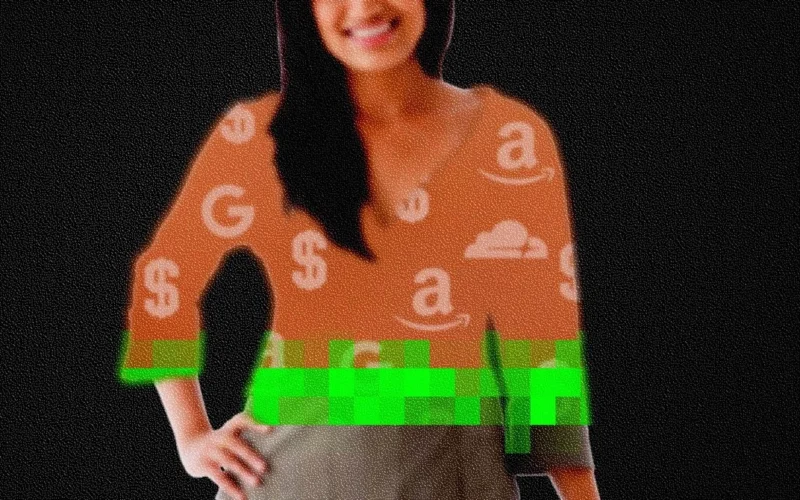
Research indicates that Amazon and Cloudflare host or deliver content for 62 of the nudify websites, while Google’s authentication system is employed by 54 of them. These nudify platforms also make use of various mainstream services, including payment systems.
Both Amazon Web Services and Google have stated their commitment to enforcing their terms of service against violators. They have implemented measures to address issues when reports come in, but the broader issue of tech companies enabling these malicious sites persists.
Nudify websites gained traction after the emergence of explicit deepfakes, evolving from low-quality projects into a significant online business. They often monetize through the sale of credits or subscriptions, further exacerbated by the recent advancements in generative AI technology.
A team at Indicator utilized open-source tools and analytics to examine the infrastructure supporting these websites. Their research suggests that around 18 of the sites generated between $2.6 million and $18.4 million in revenue in just six months.
Most of the traffic comes from the United States, followed by India, Brazil, Mexico, and Germany. As internet exposure grows, so does the popularity of these platforms, leading to wider recognition and exploitation by bad actors, including the creation of fake, malware-ridden versions of these websites.
The nudify ecosystem reflects entrenched patterns of abuse; reports indicate rising instances of cyberbullying, particularly among youth, where nonconsensual images of classmates and peers are circulated. These situations have devastating effects on victims, with the removal of such images from the web often proving challenging.
While some tech firms have begun to address the proliferation of nudify services, broader measures are inadequate. Current efforts include lawsuits and legislative actions aimed at curbing the creation and distribution of nonconsensual images. However, a more comprehensive approach is necessary to effectively dismantle these harmful services.
Although some nudify websites are attempting to alter tactics to evade enforcement, experts emphasize that stricter action from tech companies could significantly hinder the growth and accessibility of these sites. Addressing these concerns head-on is crucial for mitigating this aspect of the generative AI landscape.