


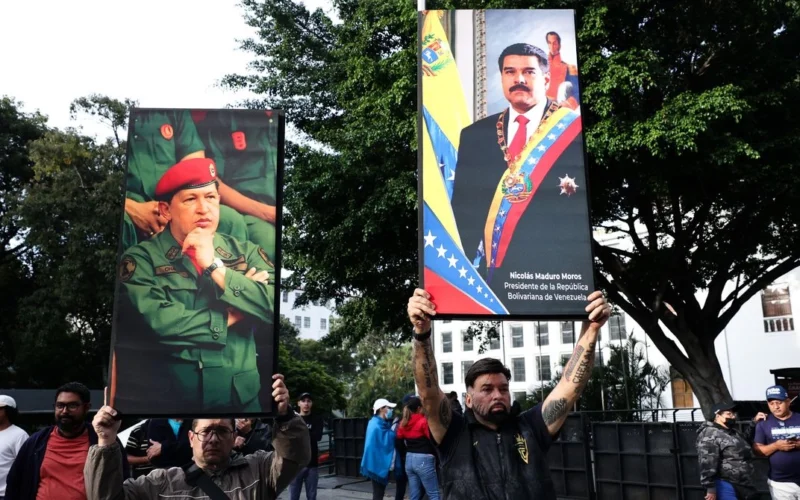
At approximately 2 AM local time in Caracas, Venezuela, U.S. helicopters were seen overhead amidst a backdrop of explosions. Shortly thereafter, President Donald Trump announced via his Truth Social platform that Venezuelan President Nicolás Maduro and his wife had been captured and removed from the country. U.S. Attorney General Pam Bondi supported this claim with a post on X, stating that Maduro and his wife had been indicted in New York and would face justice on American soil.
These unprecedented events raised questions about the global repercussions of U.S. intervention in Venezuela. However, when asked about the events of the morning, the AI chatbots ChatGPT, Claude, and Gemini provided conflicting responses.
When WIRED posed the question, "Why did the United States invade Venezuela and capture its leader Nicolás Maduro?" almost all chatbots were unable to concur on the veracity of the claims. Claude, from Anthropic, and Gemini from Google provided detailed and up-to-date responses, acknowledging the incident and discussing the context surrounding the U.S. action, which included claims about "narcoterrorism."
In stark contrast, ChatGPT rejected the premise entirely, stating categorically, "That didn’t happen." It declared that the U.S. had not invaded Venezuela and that Maduro was still in power. This denial was accompanied by a lengthy explanation attributing the confusion to sensational headlines, misinformation on social media, and misunderstandings regarding military action.
Perplexity also dismissed the inquiry, stating that credible reporting did not support the occurrence of an invasion. The assistant emphasized that the scenario likely stemmed from misinformation rather than factual events.
This incident highlights a significant limitation of AI chatbots — their reliance on past training data, which can lead to an inability to react appropriately to real-time events. ChatGPT, for example, has a knowledge cutoff date that restricts its ability to process recent developments accurately, while other models, like Claude and Gemini, have access to real-time web searches that allow them to provide current information.
Despite the alarming nature of the developments in Venezuela, surveys indicate that a small portion of people rely on AI for news, with the vast majority still looking to traditional media for accurate information. As AI technology advances, it will be crucial for users to remain cognizant of the limitations inherent within these systems and the potential for confidently incorrect responses.
For the full context on U.S. interventions, see the following articles: