



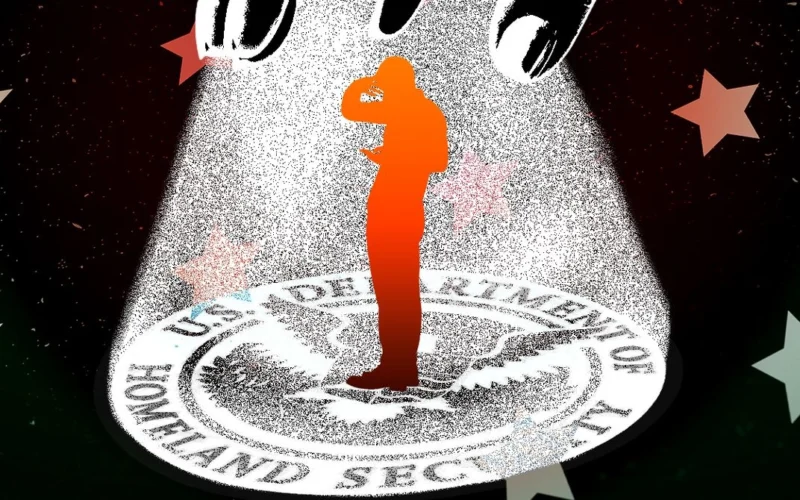
The Department of Homeland Security (DHS) has made a controversial move by seeking data from Google regarding a Canadian man who criticized the Trump administration on social media. This request followed the killings of Renee Good and Alex Pretti by federal immigration agents earlier this year, which the man condemned in his posts on X.
The unnamed individual, who has not entered the United States in over a decade, is being represented by lawyers from the American Civil Liberties Union (ACLU). They express concern over the government’s actions, emphasizing that it seems to ignore the man’s right to privacy, given his residence outside the U.S. “It’s clear that the government isn’t stopping to find out,” remarked Michael Perloff, a senior staff attorney at ACLU.
Using a customs summons, which allows the DHS to collect records related to import duties, the department requested the man’s account activity and location data from Google. Chris Duncan, a former chief counsel for U.S. Customs and Border Protection, noted that such summons should only pertain to customs-related matters, not as tools for tracing individual online activities.
Despite the summons prohibiting Google from disclosing its existence for an unspecified time, the digital giant informed the man of the request on February 9. Initially, he dismissed the notification as a joke or scam until he realized its authenticity. The summons did not clarify the rationale behind the investigation, only referencing the 1930 Tariff Act. During the requested timeframe, the man did not engage in any import or export activities from the U.S., prompting his lawyers to argue that DHS’s request was directly motivated by his online criticisms.
The man expressed his outrage over the attempt to label Good and Pretti as "terrorists" while grieving for their deaths. He stated that his intent in posting his thoughts was to provide solidarity to those who might feel isolated in their despair.
The customs summons specifically sought information about the man’s account history, including any violations of terms for "threatening or harassing language." His lawyers defend his posts as passionate but not threatening or violent.
Over recent years, the DHS has employed customs summons and other administrative subpoenas to identify critics of its immigration policies. In March, after a Reddit user’s challenge against a DHS customs summons, the agency withdrew that request but later issued a grand jury subpoena.
The extent of these practices remains unclear. Reports indicate that during a recent six-month period, Google along with other platforms received numerous such requests from the DHS. In light of these developments, a coalition of U.S. congressmembers has urged tech companies to disclose how they handle administrative subpoena requests.
The ongoing concern surrounding the DHS’s use of these subpoenas reflects broader worries about the implications for digital privacy and the rights of individuals to express dissent without fear of governmental surveillance. The ACLU and other watchdog groups continue to question the legality and ethics of these actions, highlighting a troubling intersection of technology and civil liberties in contemporary America.