




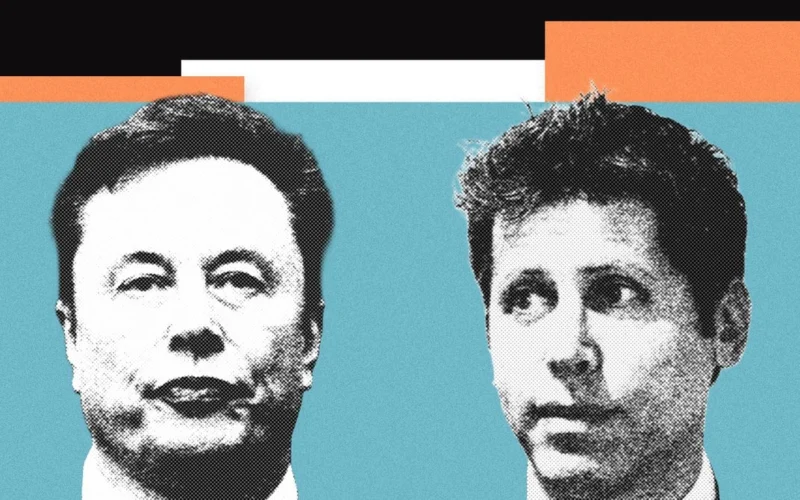
Attorneys provided their closing arguments in the Musk v. Altman trial, presenting their cases for Elon Musk and Sam Altman amidst skepticism about their commitment to OpenAI’s founding mission as a nonprofit organization. A verdict may arrive soon, concluding years of rivalry between two of tech’s most notable figures.
However, the trial has highlighted numerous losers, particularly the staff, policymakers, and the public who believed in the altruistic goals of OpenAI. The overarching theme has been the prioritization of building a leading AI lab—eventually pivoting to a multibillion-dollar for-profit model—over the initial nonprofit mission.
Jill Horwitz, a law professor at Northwestern University, noted that the public’s interest is at stake in this case, irrespective of who wins. OpenAI claims their mission is to ensure that artificial general intelligence (AGI) serves humanity, but neither Musk nor Altman is acting with this public mandate as a priority. This has led to concerns that their competition to control OpenAI, driven by corporate ambitions, overshadows its societal responsibilities.
Daniel Kokotajlo, a former OpenAI researcher, expressed fear for the public in a race to develop superintelligence, warning that Musk and Altman’s ambitions could pose risks to the public good.
The trial showcased how OpenAI’s nonprofit was viewed through a traditionally corporate lens, with OpenAI’s legal team asserting that a substantial stake in their for-profit entity demonstrated adherence to their mission. Public interest groups have countered that financial backing alone does not ensure a commitment to nonprofit goals.
Historically, Musk and Altman intended for OpenAI to function like a startup, aiming to surpass rivals like Google DeepMind. The pressure to succeed quickly rendered the nonprofit model impractical, with Musk alleging that his initial investment was misused to create an immense profit-driven enterprise, thus sidestepping OpenAI’s original charitable intent.
Musk’s arguments hinge on proving that his funding was conditional on its use for charitable purposes, while OpenAI maintains that Musk’s claims stem from a desire to regain control over a venture he no longer influences. Notably, discussions about OpenAI’s operational approach revealed no clear strategy for handling surplus funds, leading to a focus on technological advancements over ethical commitments.
OpenAI’s lawyers argued that the mission’s sustainability necessitated substantial funding, highlighting that their mission transcends the nonprofit structure itself. The nonprofit aspect, while seen as an asset, has also been characterized by the founders as a hindrance to OpenAI’s growth into a commercial powerhouse.
Underlying motivations for a for-profit shift became evident as early discussions surfaced about merging OpenAI with Musk’s Tesla to utilize resources more stealthily. Meanwhile, stakeholders have raised concerns over whether the original donors—who backed a nonprofit initiative—expected the organization to transform into a for-profit entity.
Recent testimony exposed past tensions around leadership decisions, mergers, and the implications for OpenAI’s foundational goals. Despite OpenAI’s efforts to portray itself as a charity, it shares the pitfalls common to major tech firms, facing significant legal challenges and public safety concerns tied to the AI it produces.
As the trial unfolds, OpenAI’s evolution echoes a troubling resemblance to its for-profit competitors—all while navigating the complexities of societal obligations that seem increasingly out of focus within its organizational structure. The ongoing litigation exemplifies a struggle for the soul of OpenAI, with potential repercussions that reach far beyond the courtroom.