




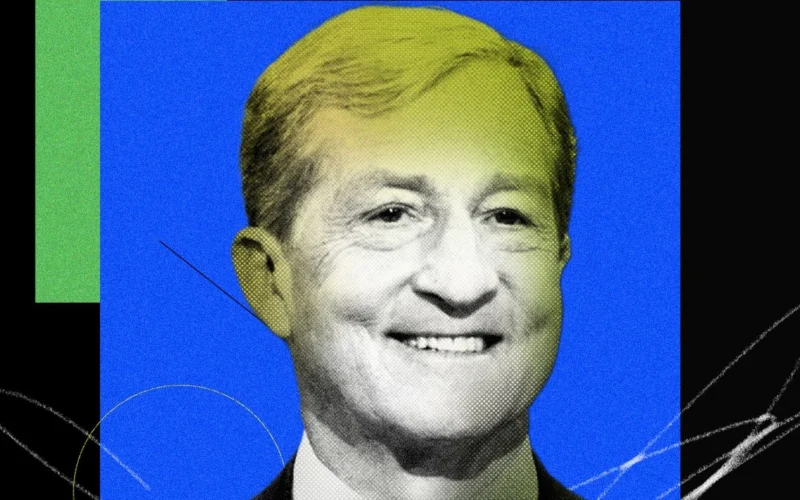
For those worried about the increasing influence of Big Tech in California, Tom Steyer appears to be a compelling candidate. Once a hedge fund billionaire and now a gubernatorial candidate, Steyer has shifted his focus to political advocacy, philanthropy, and climate activism since leaving Farallon Capital Management in 2012. As he navigates a crowded field of candidates, his platform emphasizes the need to address various pressing California issues, like AI regulation and climate change, while being mindful not to alienate the wealthiest Californians.
Steyer champions the controversial Billionaire Tax Act aimed at imposing taxes on the rich, raising concerns among elite figures like Sergey Brin and Peter Thiel, who have contemplated relocating due to such policies. His candidacy reflects a blend of support for innovative technology while advocating for more equitable solutions to the state’s economic challenges—an approach that’s complicated by his billionaire status and the campaign’s potential for massive spending.
Throughout conversations with voters and media, his responses have revealed hesitance when addressing the dichotomy of taxing billionaires while keeping the tech industry thriving. This ambivalence raises questions about whether Steyer can effectively bridge the gap between supporting California’s innovators and ensuring a fair environment for the average citizen.
In discussing his evolution from finance to activism, he reflects on early experiences with nature and the imperative of tackling climate issues, revealing concerns over his accumulated wealth lacking meaningful impact. His discussions pivot toward a vision of capitalism as an opportunity to stimulate growth and innovation while promoting environmental sustainability.
When questioned about his financial past and ties to fossil fuels, Steyer asserts that he made significant changes over a decade ago to divest from investments he deemed hypocritical while pursuing a more ethically responsible investment strategy in his philanthropic ventures.
Steyer acknowledges that many progressives challenge the existence of billionaires in the current economic landscape. Yet he argues for the necessity of innovation that can yield returns for society as a whole. He emphasizes that the prosperity generated by successful businesses should not come at the expense of the working class, whose contributions underlie California’s economic engine.
With the California Billionaire Tax Act under discussion, Steyer expresses support but believes it falls short of addressing essential issues like education reform, which he views as critical to reducing poverty and inequality in the state. He articulates a vision where shared prosperity is foundational to California’s growth, asserting that billionaires must contribute fairly to the systems that underpin their success.
Steyer is also vocal about maintaining California’s innovation momentum while creating a more balanced economic system. He envisions regulations and policies that safeguard the most vulnerable yet simultaneously nurture technological advancements to sustain the state’s competitive edge.
Another significant issue on his agenda is immigration policy, especially in light of California’s sanctuary state status. Steyer plans to defend such designations through legal enforcement mechanisms and public advocacy against practices by organizations like ICE, which he categorically critiques.
Finally, the conversation pivots to artificial intelligence, where Steyer sees significant potential benefits and significant risks. He advocates for regulatory frameworks that protect individuals from job displacement due to AI while ensuring that the technology serves as a tool for enhancing employment, not replacing it.
In sum, Steyer positions himself as a candidate who intends to harmonize the interests of billionaires with those of everyday citizens, all while navigating California’s complex social and economic landscape as he aims for the governorship in the upcoming election.