

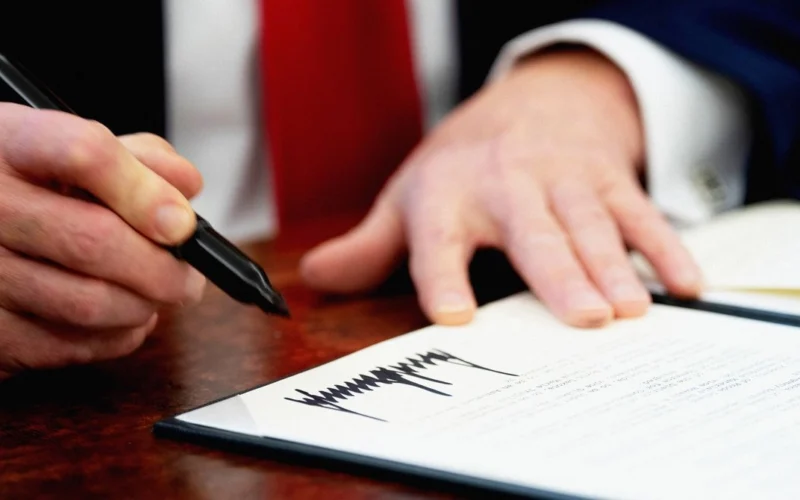
US President Donald Trump recently signed the Take It Down Act, a law aimed at combating nonconsensual sexual content online. This new legislation mandates that online platforms must remove instances of “intimate visual depiction” within 48 hours of receiving a removal request. Failure to comply could lead to substantial penalties of around $50,000 for each violation.
Support from major tech companies, including Google, Meta, and Microsoft, helped propel the legislation forward, which is expected to take effect within a year. The Federal Trade Commission (FTC) will oversee the enforcement, punishing companies that engage in what it considers unfair practices. Similar laws have been enacted in other nations, including India, to hasten the removal of sexually explicit materials or deepfakes, especially in cases where delays have allowed harmful content to proliferate online.
However, free speech advocates have expressed significant concerns regarding potential misuse of the law. Critics argue that the Take It Down Act lacks adequate protections against manipulation, potentially allowing malicious actors to exploit the system to unjustly censor legitimate content. The act is reminiscent of the Digital Millennium Copyright Act (DMCA), which requires service providers to quickly take down content flagged for copyright infringement, often leading to preemptive removals without resolution of disputes.
There are fears the Take It Down Act could become a similar tool for abuse, reminiscent of previous instances where the DMCA has been weaponized by those attempting to silence rivals or eliminate information that could be damaging to their interests. Under the new law, there are fewer deterrents against filing bad faith requests, as it only calls for good faith actions without outlining penalties for deceptive practices. Additionally, the lack of an appeals process for contested removals raises further alarm among critics who believe it could facilitate unjust censorship.
The specified 48-hour timeframe for companies to act on removal requests may also hinder thorough evaluation of the requests, increasing the risk of erroneously removing content that goes beyond the intended scope of nonconsensual visual depictions. Concerns have been raised that legitimate submissions might be censored as platforms opt for compliance over scrutiny, mirroring outcomes seen with previous regulations.
The Take It Down Act does not necessitate identity verification for those requesting content removal, posing privacy risks for legitimate users. Critics of the law have urged Congress to consider exemptions for content deemed important for public interest or educational purposes.
By passing this legislation, bipartisan support was shown through senators Ted Cruz and Amy Klobuchar, who underscored the urgency of protecting individuals affected by such content, especially minors. The intent is to provide oppurtunities for victims to reclaim their privacy swiftly, but discussions about safeguarding against potential abuses of power and misapplication of the law continue.
For more detailed insights on the implications of this legislation, you can refer to the full text of the Take It Down Act and articles addressing the concerns of free speech advocates.