



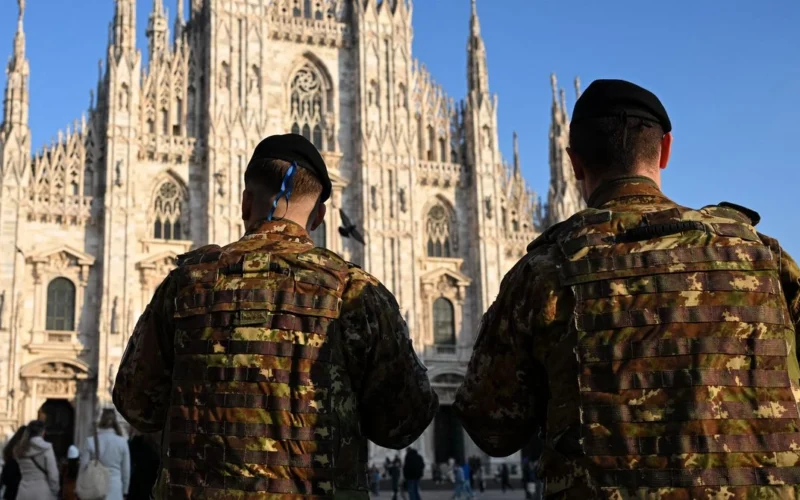
With the Milano Cortina Winter Olympics just days away, the security presence is causing significant concern among the Italian public. Reports have surfaced that US Immigration and Customs Enforcement (ICE) will be in attendance, igniting a wave of anxiety due to the agency’s controversial reputation, marked by past incidents of chaos, violence, and fatalities in the United States.
The US Department of Homeland Security confirmed ICE’s involvement, stating they would collaborate with a US delegation to assess risks from transnational crime. However, the agency reassured that they would not engage in immigration enforcement. Despite this reassurance, there is unease among Italians, particularly in light of recent high-profile incidents involving ICE agents.
Milan’s Mayor, Giuseppe Sala, has been vocal in his opposition to the presence of ICE, going so far as to declare them “not welcome” in the city. Meanwhile, Italy’s interior minister, Matteo Piantedosi, expressed uncertainty about ICE’s presence, yet indicated he did not oppose it. Prime Minister Giorgia Meloni has remained silent on the matter, adding to the confusion.
Demonstrations have erupted in Milan, with protesters gathering in significant numbers to voice their opposition to ICE’s presence, brandishing signs that read “No ICE in Milano.” Italian law enforcement, responsible for securing the events with over 6,000 personnel, will not be collaborating with ICE, as the agency’s focus will be on safeguarding high-profile US officials attending the games.
ICE’s presence is not the only contentious aspect of the Winter Olympics’ security measures. A contingent of over a hundred Qatari officers recently arrived in Italy, accompanied by a fleet of SUVs. This agreement comes after Italy’s interior minister established a cooperation framework with Qatar, despite there being no Qatari athletes participating in the Games. The involvement of Qatar’s security forces has raised eyebrows given the country’s human rights record, particularly in relation to treatment of the LGBTQ+ community.
The event, meant to celebrate sportsmanship and unity, is under a shadow as security concerns take center stage, prompting discussions about the implications of foreign security forces and their potential impact on the Games and the hosts.