




It used to be that when BMW needed to adapt a factory for a new car model, they had to send a team to physically test whether the chassis could pass through the production line. This error-prone method has been replaced by advanced simulations that allow process engineers to run a 3D model of the car through a digital twin of the factory, identifying potential issues before construction begins.
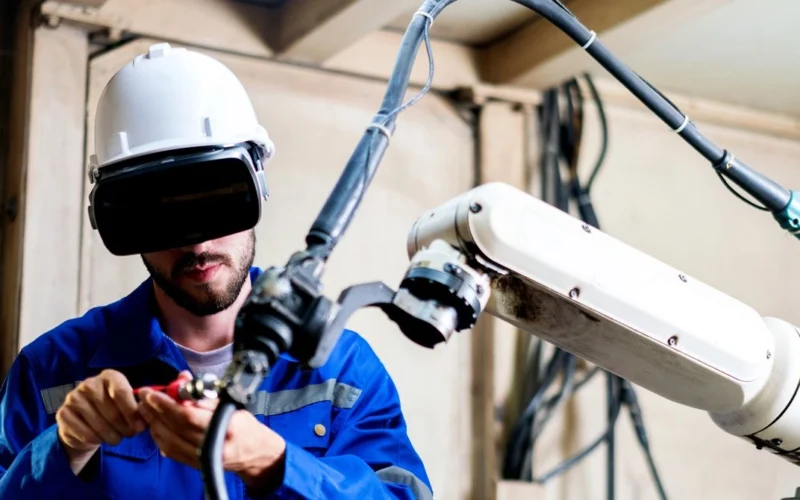
This innovation exemplifies the industrial metaverse—a concept far removed from the virtual gatherings popularized by Mark Zuckerberg during the consumer-focused metaverse hype. The industrial metaverse, projected to reach a value of $100 billion by 2030, integrates technologies like simulations, sensors, and augmented reality to create more efficient manufacturing processes.
Nvidia has been a significant player in this area, developing Omniverse, a platform that supports simulations, digital twins, and automation. Rev Lebaredian from Nvidia explains that these simulations are essential for systems requiring autonomy, highlighting the practical benefit of representing the physical world through digital reconstructions.
Various companies are applying this technology. For instance, Lowe’s tests store layouts digitally before implementing them, and Amazon uses simulated environments to train robotics systems. BMW employs Omniverse to create virtual factories, mapping car assembly processes and optimizing workflows.
BMW’s extensive virtual factories incorporate highly detailed 3D models created using an open-source format called Universal Scene Description (OpenUSD). This allows all aspects of the manufacturing process, from equipment to employee movements, to be simulated accurately.
Additionally, Omniverse facilitates collaborative car design and accommodates the intricacies of assembly line processes. Previously, the complexity of this undertaking led to costly delays due to isolated information retrieval. Now, by centralizing access to data, BMW can proactively address potential challenges in production.
As part of this framework, AI is becoming increasingly integrated. BMW is exploring generative AI to enhance navigation within its digital environment and optimize production by leveraging data from multiple plants to inform suggestions for process improvements.
Ultimately, the emergence of the industrial metaverse highlights a future where digital twins prepare industrial robots for real-world applications. The longstanding notion of the metaverse may be evolving, focusing more on practical industrial applications than virtual social interactions.


