



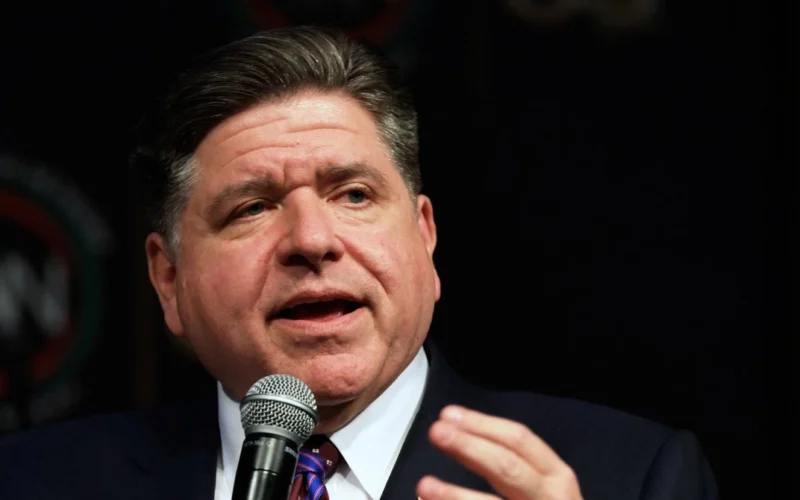
The Illinois House of Representatives has passed a significant bill aimed at regulating artificial intelligence, particularly targeting leading AI companies like OpenAI, Anthropic, and Google DeepMind. If signed into law by Governor JB Pritzker, the legislation known as SB 315 would mandate that these companies undergo third-party audits to verify their adherence to safety standards.
The urgency for such regulatory measures arises from the lack of comprehensive AI safety legislation at the federal level, prompting state lawmakers to take the initiative. Governor Pritzker expressed his intent to sign the bill, emphasizing the necessity for accountability from Big Tech. With AI systems becoming more prevalent, public demand for regulation has surged, and recent polls suggest that voters are increasingly in favor of stricter oversight.
Under SB 315, independent auditors would assess the safety practices of AI labs, requiring that companies demonstrate compliance with their own declared safety standards. This move is seen as a vital step in ensuring that AI companies do not simply self-evaluate, a concern echoed by policy advocates. Scott Wisor of the Secure AI Project highlighted that this new framework would eliminate the current scenario where AI firms essentially grade their own homework.
The bill is particularly noteworthy because it builds on the regulatory frameworks established by California and New York, enhancing them by necessitating independent verification of safety claims. Representative Daniel Didech, one of the sponsors of SB 315, noted that state legislatures are pivotal in shaping AI policy and could pave the way for future federal regulations.
Despite the bipartisan support for SB 315, there has been pushback from certain sectors of Silicon Valley. The Chamber of Progress, comprising major tech players like Google and Apple, has expressed concerns about the bill’s potential to expose sensitive systems to untested auditors and the lack of clear standards. Nonetheless, both OpenAI and Anthropic have expressed their support for the bill, acknowledging that it sets a necessary baseline for AI safety.
The bill’s passage highlights the increasingly contentious debate over AI regulation and sets Illinois as a critical player in the development of AI policy in the United States. It remains to be seen how this initiative will influence broader legislative efforts at the federal level.