


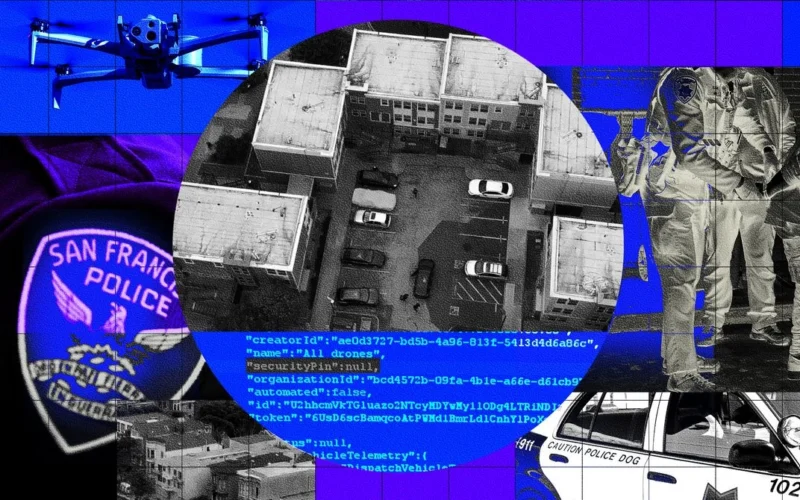
Just after noon on a Saturday, a Skydio X10 quadcopter hovered above a San Francisco apartment complex, documenting a police chase for a suspect hiding behind a parked car. Unbeknownst to the man, the drone had been tracking him across the city, capturing footage of his license plate until police surrounded him for an alleged theft from a vehicle.
The incident not only revealed the capabilities of the SFPD’s drone surveillance but also exposed a significant data breach. The drone footage, including both color and thermal imaging, was livestreamed onto Skydio’s website, accessible to anyone who stumbled upon it. Security researchers discovered this vulnerability, reporting their findings to Skydio shortly after. The footage featured multiple arrests, police actions, and the surveillance of citizens across the city, all available at a publicly accessible URL.
The breach yielded over 60 videos from 20 separate drone flights within 48 hours, with metadata that included drone pilots’ personal information. An analysis revealed that hundreds of people and vehicles were filmed, raising concerns over privacy and the potential misuse of surveillance data. Despite SFPD’s drone policy, which aims to limit data collection, the exposed feeds showed a broad range of activities unrelated to immediate police operations.
As the incident unfolded, SFPD acknowledged the exposure as an internal link that had been improperly accessed. They claimed to have implemented stricter sharing protocols after the discovery. Yet, the incident raises serious questions about the extent and oversight of aerial surveillance, as many people captured on video were unaware they were being recorded.
The implications are even more chilling considering advancements in artificial intelligence, which could analyze massive amounts of footage collected during these flights. Experts from privacy advocacy groups argue that the existing drone policies are not robust enough to protect citizen privacy adequately. The delivered footage not only revealed law enforcement activities but also invaded the everyday lives of unsuspecting individuals.
The San Francisco drone program, which began in 2024, has since expanded significantly, reflecting a growing trend in U.S. law enforcement. Despite public discontent over such surveillance methods, the city maintains a transparency portal detailing drone flights, albeit without video. This incident serves as a cautionary tale, illuminating the thin line between necessary law enforcement tools and invasive surveillance tactics that encroach upon personal privacy.