


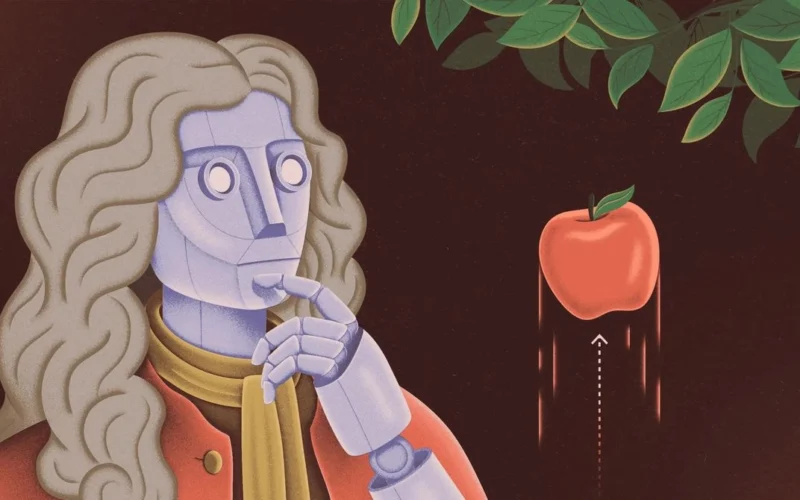
Infants exhibit a remarkable ability to intuitively grasp concepts such as object permanence, which they develop through observational learning. In a similar vein, researchers at Meta have created an AI model known as Video Joint Embedding Predictive Architecture (V-JEPA) that learns about the physical world through videos and can express a form of "surprise" upon encountering information that contradicts its learned understanding.
The challenge faced in AI modeling lies in making sense of visual information. Traditional AI methodologies typically rely on “pixel space,” where the model treats every pixel equally, often leading to misinterpretation due to irrelevant details. For instance, when classifying a suburban scene, a pixel-space model might get distracted by moving leaves and overlook critical signals like traffic lights.
V-JEPA addresses these shortcomings by using "latent" representations that distill essential information from the visual data, allowing the model to focus on significant details. In its architecture, V-JEPA consists of two encoders and a predictor. The first encoder processes masked video frames into high-level latent representations, while the second encoder analyzes the entirely revealed frames. The predictor then utilizes the data from the first encoder to predict the latent representations from the second encoder, enabling the AI to prioritize what matters and ignore extraneous information.
The effectiveness of V-JEPA was underscored in a study where it achieved nearly 98% accuracy on the IntPhys benchmark, assessing the physical plausibility of actions depicted in videos. This performance starkly surpasses that of a conventional model working in pixel space, which struggled at chance levels.
Furthermore, the model quantitatively measures its prediction errors, displaying a direct correlation to its surprise when facing physically implausible scenarios. For instance, if a ball that rolls behind an object does not re-emerge, V-JEPA’s prediction error indicates its unexpected outcome, showcasing an intuitive understanding reminiscent of human infant development.
While V-JEPA shows significant promise in mimicking human-like intuitive physics understanding, experts note areas for enhancement, such as addressing the encoding of uncertainty in its predictions. In a move forward, Meta released V-JEPA version 2, which builds upon the original and includes the capability to be fine-tuned for different tasks, especially in robotics, allowing it to process actionable data efficiently.
V-JEPA’s journey illustrates not only advancements in AI comprehension of the physical world but also raises intriguing parallels to human cognitive development, beckoning a future where AI might learn in a manner increasingly akin to humans.