



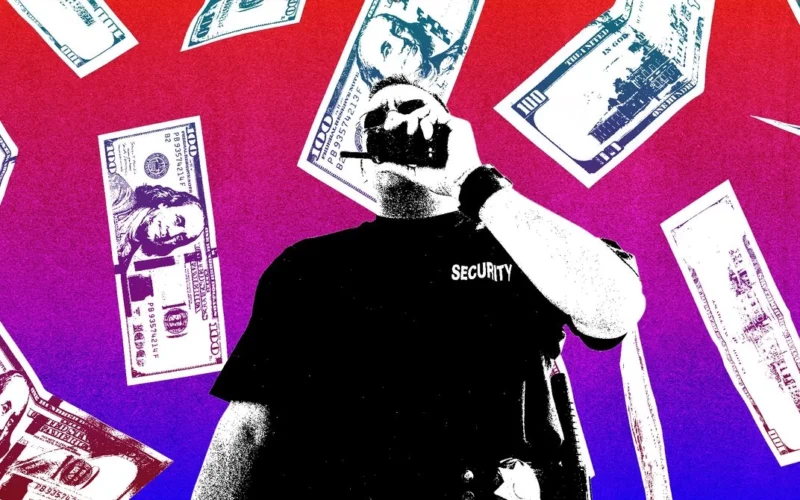
Political candidates are increasingly investing in security measures, such as home alarms and bulletproof vests, due to growing fears of political violence. A recent report by the Security Project at the Public Service Alliance revealed that federal campaign and political action committee spending on security in the 2024 election cycle exceeded five times the amount spent during the 2016 election.
This surge in spending aligns with a notable rise in violent threats against public servants across all levels of government. Justin Sherman, interim vice president of the Security Project, expressed concern about the financial burden this creates for candidates, emphasizing that no individual should have to choose between public service and personal safety.
An investigation by the Minnesota Star Tribune highlighted a dramatic increase in threats against workers in the Minnesota State Capitol, jumping from 18 incidents in 2024 to 92 in 2025. Furthermore, a report from the Public Service Alliance found that threats against the families of public servants soared by 3,700 percent from 2015 to 2025. A survey from the Pew Research Center revealed that a significant majority of Americans from both political sides believe politically motivated violence is on the rise.
The spending data tracked by the Federal Election Commission over the past decade indicates that most security expenditures are focused on securing campaign events. However, spending on digital security, including online threat monitoring and data deletion, has seen a nearly 400 percent increase over eight years, with campaigns spending more than $900,000 for the 2023–2024 cycle compared to $184,000 in the previous cycle. Additionally, expenditures for securing candidates’ homes doubled, reaching over $300,000.
Despite this rise in spending, limitations in the FEC data make it challenging to discern whether spending on security is proactive or reactive, as campaign disbursement forms often provide minimal details.
At the state level, legislatures are considering reforms allowing candidates to use campaign funds for personal security measures. Currently, only a limited number of states have explicit laws permitting such security expenditures. Helen Brewer, a senior policy specialist at the National Conference of State Legislatures, noted an uptick in threats across party lines.
Utah state senator Mike McKell, who has witnessed vandalism targeting political figures, recently supported legislation that clarifies candidates can utilize campaign funds for security system purchases. McKell lamented the necessity for such measures, stating, "It’s been a problem in the state of Utah."
In Minnesota, state senator Bonnie Westlin, who experienced direct threats this summer linked to a shooting that claimed the life of her colleague Melissa Hortman, has introduced a bill aimed at protecting candidates’ personal information by excluding their street addresses from public campaign filings. This bill could help deter stalking and harassment, while also allowing candidates to enhance their home security without exceeding campaign spending caps.
Moreover, the National Conference of State Legislatures has recently established a fund to assist legislators in investing in personal security, offering resources like privacy monitoring services or self-defense training. This initiative has been met with positive feedback from lawmakers.
Reflecting on the current situation, Westlin expressed dismay over the necessity of such security measures, stating, "Running for office in some cases has meant risking your life, and in the case of Mark and Melissa, actually losing their lives… That’s not what public service should include."
For more information, visit the Public Service Alliance and Pew Research Center.