



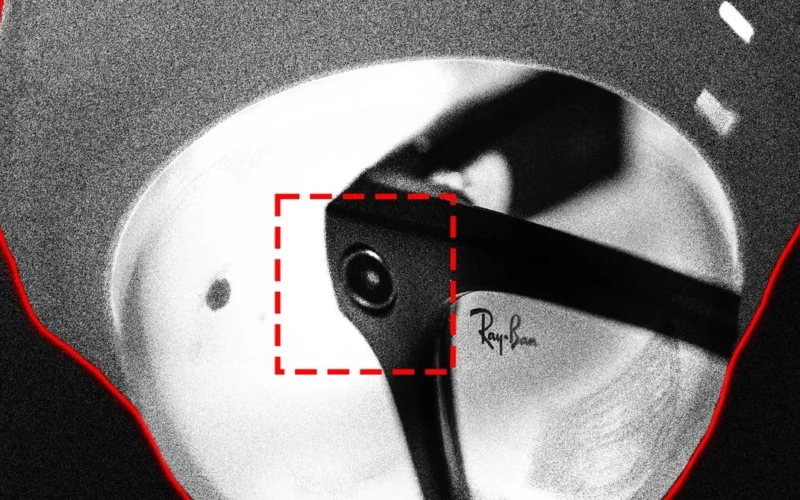
Meta is currently in the process of testing face-recognition technology developed by Rank One Computing, a vendor known for providing surveillance tools to law enforcement and military agencies. This collaboration came to light through a software license that WIRED obtained, linking Rank One’s technology to a test version of the Meta AI app, which powers the smart glasses made by Meta, including Ray-Ban and Oakley.
Rank One, based in Denver, claims to generate about 80% of its revenue from government contracts. Its face-recognition technology has found applications with the U.S. Marshals Service and the Naval Criminal Investigative Service, showcasing its capabilities to identify individuals even from a distance of up to a kilometer. Law enforcement agencies across the U.S. are also utilizing these algorithms through other commercial vendors.
This development marks the first confirmed partnership between Meta and Rank One and illustrates the increasingly blurred lines between surveillance technology intended for law enforcement and the consumer devices being offered to the public. Notably, the technology licensed from Rank One enables Meta to utilize face-recognition along with liveness detection—ensuring that the captured image is of a real person.
Recently, code reviewed by WIRED showed that traces of Rank One’s system integration were present in a version of the Meta AI app distributed to consumers. However, it’s important to highlight that none of the associated recognition systems were active for users, as Meta removed all components related to the Rank One technology shortly after WIRED reported on its existence.
Despite inquiries, Meta has remained largely silent about the details of this partnership, including the timeline and future intentions related to the use of Rank One’s software. Meanwhile, Rank One has not provided any comments regarding the collaboration.
Founded in 2015, Rank One was established by engineers with experience in facial-recognition technologies from the nonprofit research organization Noblis. The company has gained credibility, with a leadership team that includes former high-ranking officials from the FBI, CIA, and Pentagon.
Concerns are growing surrounding the application of facial recognition technology in consumer products, particularly given that many regulations governing such technology in the United States are scarce. There are state-level laws requiring police to obtain a warrant for accessing biometric data, yet experts caution that there is an increasing demand for this technology among consumer-facing companies without sufficient oversight.
As the line between military and consumer technology continues to blur, the push for advanced facial recognition systems raises significant privacy concerns and underscores the necessity for more robust regulatory frameworks.