





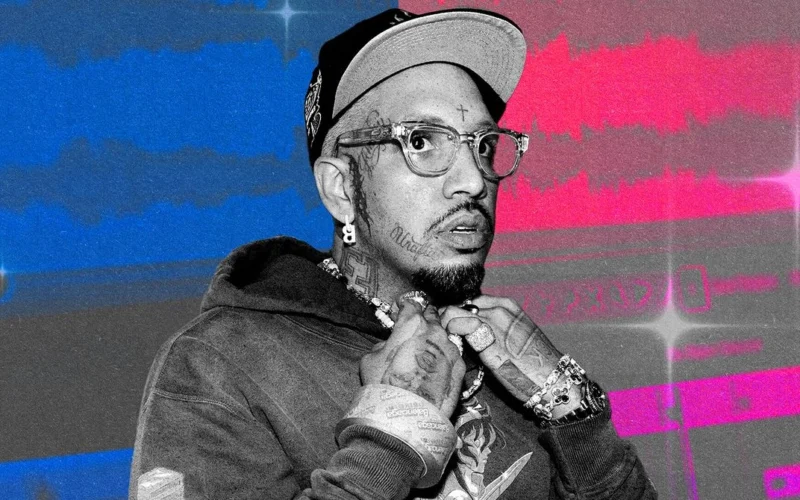
Fenix Flexin’s track “Rubberz” has emerged as a potential song of the summer, yet its authenticity is under intense scrutiny. Released in June, the song climbed to No. 58 on the Billboard Hot 100 and boasts a music video garnering 7 million views. Notably, “Rubberz” is more synth-pop than rap, diverging from Flexin’s established style and raising suspicions among fans that AI may have played a role in its creation.
This speculation intensified over the weekend when an independent music producer claimed he identified a generative AI app called Treblo as the tool used in creating the song. Treblo’s developers inadvertently supported this claim with an AI detection feature now flagging both “Rubberz” and related tracks from Tyga—which further fuels the debate.
Early apprehensions around Fenix’s sound were largely based on how distinctly different his voice sounded on “Rubberz,” with fans noting it lacked his recognizable nasally tone. Despite denials from both Fenix and his producer about using AI, doubt lingered as the summer progressed. A music producer named Medasin stepped in with a video claiming to have reverse-engineered the song using Treblo, pointing out that the capabilities of the app matched the unusual lyrical and stylistic choices present in "Rubberz."
Medasin’s video drew attention to similarities between his generated lyrics and those in “Rubberz," suggesting a striking overlap in rhetorical styles and content. His experiments with Treblo confirmed it was indeed possible to create a track reminiscent of Fenix’s hit, further casting doubt on the song’s origins.
In response to this unfolding saga, Fenix attempted to dispel accusations by posting what he claimed was the original project file for “Rubberz.” However, music producers critiqued the authenticity of the file, suggesting it could have been manipulated with software that deconstructs songs. Shortly after posting it, Fenix deleted the video, prompting speculation over the mounting evidence against him.
The conversation around AI in music has gained traction, paralleling broader conversations in digital content about transparency and authenticity. Other platforms are beginning to develop tools to label AI-generated work, reflecting a growing concern over distinguishing human-made art from machine-generated creations.
As debate continues, many fans have expressed indifference toward the allegations, firmly attached to the song irrespective of its origins. Medasin acknowledges this perspective, having initially enjoyed “Rubberz” before questioning its authenticity. He believes AI can find a place in music but emphasizes that artists have a responsibility to communicate transparently about their creative processes.
With the debate surrounding “Rubberz” still raging, one thing remains evident: the intersection of music and AI is a critical focal point in contemporary music history, compelling listeners to grapple with what authenticity and artistry mean in today’s digital landscape.


