





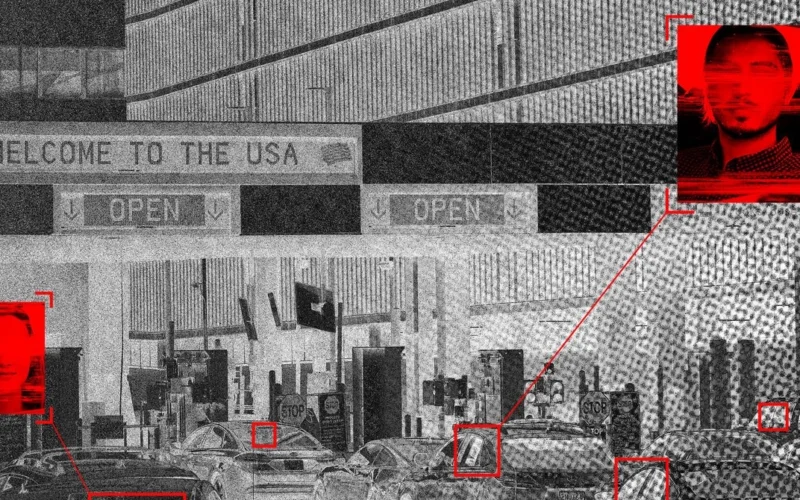
United States Customs and Border Protection (CBP) has issued a call for technology companies to develop a real-time facial recognition system capable of capturing the images of all passengers in vehicles crossing the border, not just those seated in the front. This request was made public through a federal register document and signifies an expansion of current operational capabilities.
CBP has been utilizing a existing facial recognition tool at air, sea, and pedestrian land entry points, which matches images taken of travelers against their travel documents. However, the agency has acknowledged that current technology struggles with capturing all individuals inside vehicles, particularly those seated in rear rows, due to factors like human behavior and environmental obstacles.
The agency is now seeking vendors capable of enhancing the existing system to ensure every passenger image is captured. According to investigations by the Electronic Frontier Foundation (EFF), data shows that previous systems have demonstrated low success rates, capturing images of all occupants in vehicles only 76% of the time, with merely 81% of those meeting validation requirements.
CBP uses a one-to-one matching system that poses a risk of false negatives—where a person is not recognized as matching their own identification documents—contrasting with one-to-many systems used to identify suspects, which can lead to false positives. The efficiency and effectiveness of the CBP system remain uncertain, particularly with respect to potential biases in error rates among different demographics.
As CBP pushes for an upgraded surveillance system, it faces ongoing challenges in gathering biometric data from individuals leaving the country, especially those crossing land borders. The recent focus has primarily been on managing inbound traffic, leaving outbound surveillance capabilities unaddressed.
This request aligns with previous announcements by the Department of Homeland Security (DHS) regarding surveillance enhancements, showcasing a continuous trend of implementing advanced monitoring technologies across administrations. The request also follows a notable contract where Immigration and Customs Enforcement (ICE) is paying Palantir $30 million to develop a platform for real-time tracking of self-deporting individuals. However, it remains unclear how data for this system will be acquired.
In conclusion, CBP’s initiative to implement comprehensive facial recognition at border crossings raises important questions about civil liberties, operational effectiveness, and the implications of increased surveillance on various communities as it seeks to adapt to modern border security challenges.
For further reading on related topics, you can visit the following links:


