

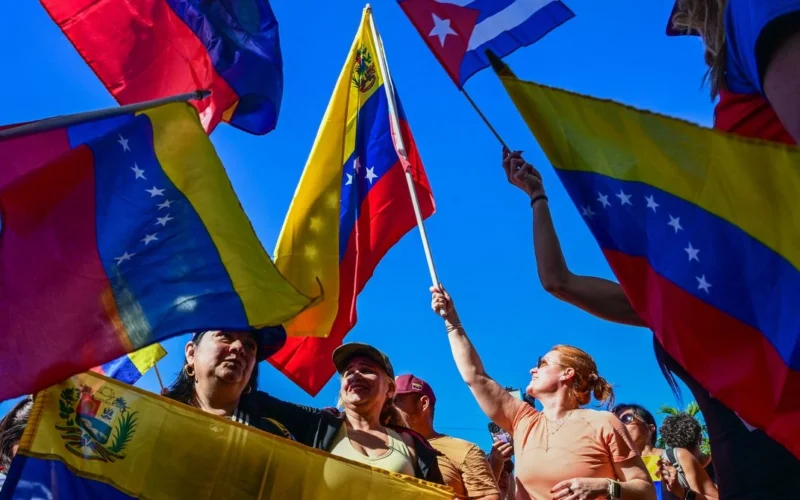
Within minutes of Donald Trump announcing that US troops had captured Venezuelan president Nicolás Maduro and his wife Cilia Flores on January 3, 2026, a wave of disinformation began to flood social media platforms. Users shared misleading content, including old videos that falsely claimed to depict attacks in Caracas, as well as AI-generated images and videos that allegedly showed the arrest.
In the wake of global incidents, social media has often been inundated with disinformation, especially as tech companies have limited their moderation efforts. Many accounts took advantage of relaxed regulations to increase engagement.
In his early Saturday morning post, Trump declared, “The United States of America has successfully carried out a large scale strike against Venezuela and its leader, President Nicolás Maduro.” Shortly after, US Attorney General Pam Bondi announced the indictment of Maduro and his wife on numerous charges, stating they would face “the full wrath of American justice on American soil.”
As the news of Maduro’s arrest spread, an image claiming to show DEA agents alongside the president became widely circulated. However, analysis using Google DeepMind’s SynthID technology confirmed the image was likely created or altered by AI. Furthermore, other AI tools produced videos claiming to depict Maduro’s arrest, garnering hundreds of thousands of views on TikTok.
The trend of spreading disinformation continued, with users often repurposing older footage and falsely attributing it to recent events. For instance, pro-Trump influencer Laura Loomer shared a video of people tearing down Maduro posters after the announcement, claiming it depicted celebrations of Maduro’s capture—despite the original content being from 2024. Another video showing an alleged US assault on Caracas, which has been viewed over 2 million times, was actually footage from a TikTok post made in November 2025.
This pattern of misinformation is not new; similar reactions have been observed following other significant global events, such as the Israel-Hamas war or the US bombing of Iranian nuclear sites, showing a concerning trend in how quickly misleading narratives can spread in the digital age.
For additional context on the implications of disinformation in elections and global affairs, you can read more on the topic in the following articles: