




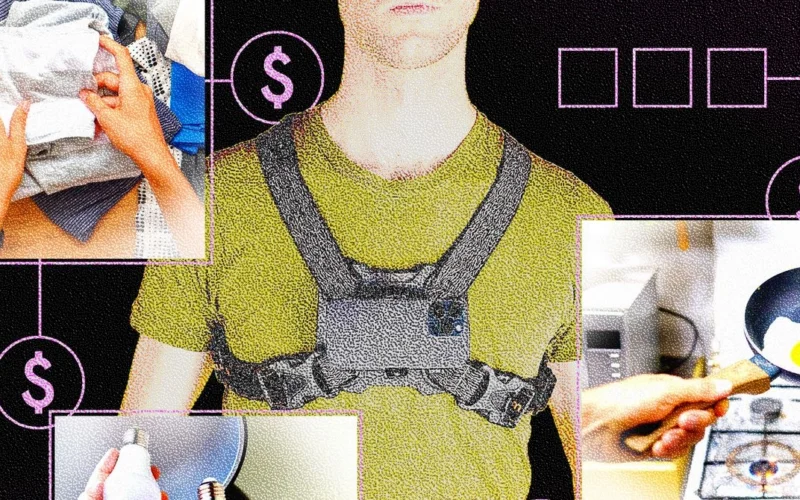
I recorded videos of myself doing laundry, scrambling eggs, and exploring the park using DoorDash’s new Tasks app, which compensates gig workers for helping train AI. This initiative focuses on collecting human-generated training data to enhance the capabilities of generative AI and humanoid robots. According to DoorDash, this data helps AI understand the physical world better, with payment depending on the task’s complexity.
In this app, users wear smartphones on their chests to film various tasks. For instance, recordings of folding laundry help bolster robotic computer vision. When I first accessed the Tasks app, I began with a simple assignment: moving three objects across my desk. Upon completion, I received a free body mount to facilitate better filming for future gigs.
The tasks available in the app largely fall into five categories: household chores, handiwork, cooking, navigation, and language conversations. Household tasks include simple activities like making the bed or loading the dishwasher, while handiwork ranges from changing lightbulbs to pouring cement. The cooking tasks predominantly involve making eggs, with various preparation methods required.
Before jumping into my tasks, I reviewed the app’s stringent rules, which advise against filming minors or illegal activities, and require consent for any other individuals in the frame. Notably, certain US residents, such as those in California and New York City, are blocked from using the app.
My first legitimate task involved loading laundry into the washer and required my body camera mount, which hadn’t arrived yet. Thus, I filmed with my phone in one hand. The task paid $15 for an estimated maximum of 20 minutes of filming time. However, I grew frustrated as my hands sometimes slipped out of view, leading to frequent beeping warnings from my phone. Ultimately, I recorded about 10 articles in less than two minutes, with my payout estimating only $0.37.
Next, I attempted a cooking gig, focusing on scrambling eggs. This task, too, could earn me $5, though it required careful filming from preparation to finished state without interruptions. Unsurprisingly, I felt a bit disconnected from cooking’s enjoyment given the constraints.
Feeling cooped up, I opted for a navigation task to "explore a park," which also paid $15 for a max of 20 minutes. I ventured to my nearby park, recording landmarks while trying to navigate around other park-goers without inadvertently filming them—a challenge given the sparse rules regarding consent. Eventually, I cut my filming short when I noticed a jogger approaching.
Many in the gig economy space, particularly in cities like San Francisco, view such low-paying jobs for AI training as a new frontier. Interestingly, while generative AI and robotics attract huge investments, my profits from DoorDash’s Tasks app were relatively paltry. After completing three tasks, I anticipated earning less than $10, enough only for some eggs and a snack on my way back home. If robots are indeed our future overlords, I hope they compensate us better than that.